
We are looking at bringing quality control orders for mass production items such as smart meters and ceiling fans. This will benefit our own industry and consumers, a government official said.

'Its people are either victims of corruption or witnesses to it.'
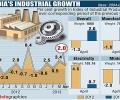
Vivek Mahajan (Head - Research) Aditya Birla Money, analysed the slow IIP growth.

Prices of natural gas, which is used to generate electricity, make fertiliser and is converted into CNG to run automobiles, is likely to rise to record levels at the rate review scheduled this week, sources said. The government-dictated price for natural gas produced in the country is to be revised on October 1. After factoring in the spike in energy prices witnessed in recent months, the rate paid for gas produced from old fields such as of state-owned Oil and Natural Gas Corporation (ONGC) is likely to rise to $9 per million British thermal units from current $6.1.

The output of eight core sectors grew 8.9 per cent in June, mainly due to a low base effect and uptick in production of natural gas, steel, coal and electricity, official data showed on Friday. The eight infrastructure sectors of coal, crude oil, natural gas, refinery products, fertilisers, steel, cement and electricity had contracted by 12.4 per cent in June 2020 due to the lockdown restrictions imposed to control the spread of coronavirus infections. In May this year, these key sectors had recorded a growth of 16.3 per cent, while it was 60.9 per cent in April.

India must be prepared to deal with climate disasters, geopolitical confrontations, and social strife linked to global events, asserts Jayant Sinha, chairman of Parliament's Standing Committee on Finance.

Investors are showing some interest in the downstream energy cycle. Refiners and marketers, especially the public sector (PSU) oil marketing companies (OMCs) could see a revival of marketing margins. Lower crude oil and gas prices may also improve margins in industries like paints, logistics, synthetic fabrics, plastics, and fertilisers. In the medium-term, however, there could be a supply overhang affecting OMCs as new refining capacities are scheduled to be commissioned, especially in China, and this may lead to a drop in the refining margins as capacity would be surplus to demand until and unless there's a pick-up in global growth.

Eight core sector industries recorded a growth of 5.5 per cent in February, the highest in 11 months, mainly due to healthy expansion in output of coal, refinery products and electricity, according to a government data released on Tuesday. The eight core sector industries -- coal, crude oil, natural gas, refinery products, fertiliser, steel, cement and electricity -- had expanded by 2.2 per cent in February last year.

Over half, or 269 NSE 500 stocks, have given over 10-fold (10x) returns in the last two decades, finds a recent report by Goldman Sachs that analysed 10 major markets across emerging and developed markets (EM/DM) that covered 6,700 stocks. The report examined '10-baggers' - stocks that have generated at least 10x total returns within a rolling 5-year period over the past two decades. Some of the prominent ones that comprise these 269 stocks in the Indian context stocks that delivered over 10x total returns over a 5-year rolling period since 2000 as per Goldman Sachs includes Westlife Foodworld, Bharti Airtel, Adani Total Gas, Patanjali Foods, Larsen & Toubro, BEML, Blue Star, Shree Cement, Lupin, Godrej Industries, Astral, Adani Enterprises, Hindustan Petroleum and Deepak Fertilisers.

Sectors which recorded positive growth were coal, refinery products and fertiliser.

The output of eight core sectors declined by 4.6 per cent in February, the steepest contraction in the last six months which experts said could drag the overall industrial production in the month into the negative territory. All the key segments, including coal, crude oil, natural gas, and refinery products, witnessed a decline in production, according to the official data released on Wednesday. The growth rate of the eight infrastructure sectors -- coal, crude oil, natural gas, refinery products, fertilisers, steel, cement and electricity -- stood at 6.4 per cent in February 2020. Last time in August 2020, the sectors had recorded a negative growth of 6.9 per cent.

Prices of natural gas, which is used to generate electricity, make fertiliser and is converted into CNG to run automobiles, were on Friday hiked by a steep 40 per cent to record levels, in step with global firming up of energy rates. The rate paid for gas produced from old fields, which make up for about two-thirds of all gas produced in the country, was hiked to $8.57 per million British thermal units from the current $6.1, according to an order from the oil ministry's Petroleum Planning and Analysis Cell (PPAC). Simultaneously, the price of gas from difficult and newer fields like the ones in Reliance Industries Ltd and its partner bp plc operated deepsea D6 block in KG basin, was hiked to $12.6 per mmBtu from $9.92, the order said.

On February 24, when Vladimir Putin announced a military operation on Ukraine, few would have thought that Indian government-owned GAIL India would feel the impact. The tensions over gas supplies were essentially a Europe-Russia problem, related to the sanctions western economies imposed on Moscow. But the EU depends on Russian imports for 40 per cent of its gas stocks, an over-dependence that Russia has underlined with Kremlin-owned Gazprom cutting its supplies through the Nord Stream 1 pipeline to 20 per cent, citing maintenance issues.

Domestic-focused agricultural chemical (agrochem) companies could face near-term headwinds, given the worries on the El Nio effect on monsoons, higher inventory, and pressure on margins. Some of these were reflected in the October-December quarter (third quarter, or Q3) results of companies and may impact them in the current quarter (fourth quarter, or Q4) as well. Nuvama Research pointed out that the sector witnessed mixed performance during the quarter as global agrochem and domestic fertiliser companies maintained growth momentum, while adverse agronomical conditions and excess channel inventory weighed on domestic market volume offtake.
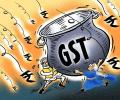
The Centre is looking to convene a meeting of the all-powerful Goods and Service Tax Council in early January. The meeting is likely to focus on rectifying the inverted duty structure for a few more items and will also serve as a platform for pre-Budget discussions between Union Finance Minister Nirmala Sitharaman and state finance ministers, Business Standard has learnt. "The current Winter Session of Parliament ends on December 23, followed by the Christmas-New Year period. "After that we would like to have a meeting of the GST Council, depending on whether there can be a quorum," a top government official said.

Indian Oil Corporation (IOC), the nation's largest oil firm, has walked away with half of the natural gas that Reliance Industries Ltd and its partner bp of the UK offered in the latest auction of the fuel used to generate power, produce fertilizer, turned into CNG and used for cooking purposes. IOC got 2.5 million standard cubic meters per day out of the 5 mmscmd of gas auctioned last month, sources with knowledge of the matter said. The oil refining and marketing company, which was the top bidder even in the previous auction of gas from the eastern offshore KG-D6 block of Reliance-bp, bid the volumes on behalf of seven fertilizer plants.
State-owned Indian Oil Corporation (IOC), Adani-Total Gas Ltd and Shell were among the 29 companies that bid and bought natural gas to be produced from the deepest field in the KG-D6 block of Reliance Industries Ltd and bp, sources said. IOC walked away with almost half of the 6 million standard cubic meters per day of gas sold in an e-auction on Wednesday while state-owned gas utility GAIL bought 0.7 mmscmd, Adani-Total Gas Ltd 0.4 mmscmd, Shell 0.5 mmscmd, GSPC 0.25 mmscmd and IGS another 0.5 mmscmd, two sources with knowledge of the matter said. Reliance-bp on Wednesday held an e-auction for sale of gas from the MJ field in their eastern offshore KG-D6 block after incorporating the government's new marketing rules to give CNG-selling city gas companies first priority over supplies.

The output of eight core sectors grew by 16.8 per cent in May, mainly due to a low base effect and uptick in production of natural gas, refinery products, steel, cement and electricity, official data released on Wednesday showed. The eight infrastructure sectors of coal, crude oil, natural gas, refinery products, fertilisers, steel, cement and electricity had contracted by 21.4 per cent in May 2020 due to the lockdown restrictions imposed to control the spread of the COVID-19 infections. In March this year, these key sectors had recorded a growth of 11.4 per cent, and 60.9 per cent in April.
Slow growth in key sectors would also have implications on the Index of Industrial Production (IIP) number as these segments account for about 41 per cent to the total factory output.

'It will be important strategically and geographically because there is no port in India which is as close to the international shipping route as Vizhinjam.'

Slow growth in the key sectors would have implications on the IIP number as these segments account for about 41 per cent of the total factory output.

Production of coal, crude oil, natural gas, refinery products, fertiliser, steel, cement and electricity contracted. The record contraction in the growth rate of eight core sectors will affect the Index of Industrial Production.

So far, GMTS has defaulted on the supply of more than 20 cargoes or shiploads, 13 of which were set to be received in the second quarter (July-September), officials said.

'The RSS has opposed the introduction of GM Mustard tooth and nail, but PM Modi does not give a hoot for what they think.'

The eight sectors, which also include fertilisers, steel, natural gas, electricity and crude oil, had expanded by 1 per cent in June last year.

Coal, crude oil, natural gas, cement, and electricity recorded a negative growth of 8.6 per cent, 5.4 per cent , 3.9 per cent, 4.9 per cent and 2.9 per cent, respectively, in August.

New Delhi's timing couldn't have been worse, both for India's fledgling electric vehicle (EV) sector and prospective electric bike buyers. It was hard to miss the perfect storm brewing for India's EV industry since early 2022. On one hand, you had several accidents involving battery fires that unnerved consumers; on the other, uncertainty had crept in over subsidies.

If the corruption issue doesn't claim Mr Baghel, the Congress's chances in the assembly election later this year are good, observes Aditi Phadnis.

India's economy grew 6.1 per cent in the fourth quarter of 2022-23, pushing up the annual growth rate to 7.2 per cent, official data showed on Wednesday.

Shipments from Russia rose nearly 33 per cent to $1.1 billion in March from $831.17 million in the previous month, which was when the country mounted aggression on Ukraine and faced sanctions from Western nations, the data accessed by Business Standard shows. Growth in imports was largely on account of oil, people aware of the matter said. The Department of Commerce is learnt to have written to the Ministry of Petroleum and Natural Gas (MoPNG), seeking details of imports, including the payment mechanism, which India has not made public.

'He is exposing the failings of the BJP, which is rankling the party.'
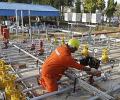
The 62 per cent increase in natural gas prices by the Indian government will boost the profitability of upstream companies in the country and support their investment spending, Fitch Ratings said on Tuesday. The price for gas from fields that were assigned by the state to oil companies, mainly Oil and Natural Gas Corporation (ONGC) and Oil India Ltd (OIL), increased to $2.90 per million British thermal units (mmBtu) for October 2021-March 2022, from $1.79 per mmBtu in the previous six months. "Higher gas prices will increase the input cost for key end-consumer sectors, to the extent the price hike is passed on," Fitch said.
According to the commerce and industry ministry data, during April-February 2018-19, the eight sectors recorded a flat growth rate of 4.3 per cent over the same period previous fiscal.
The production of coal, refinery products and electricity grew by 8 per cent, 1.9 per cent and 2.8 per cent, respectively.

Coal, natural gas, refinery products and cement grew by 16 per cent, 7 .4 per cent, 2.7 per cent, and 16 .6 per cent in April this year, respectively.

Infrastructure accounts for nearly 38 per cent of India's industrial output

Department of Economic Affairs secretary Atanu Chakraborty said that equity capital flows have been positive this year.

Sluggish infrastructure sector growth would also have impact on IIP as these segments account for about 41 per cent of the total factory output.

Don't be surprised if growth in the second half of the financial year drops below 4%, which is where it was in the year before the pandemic, warns T N Ninan.

According to a commerce and industry ministry statement, the growth rate for these eight key sectors for April 2019 has been revised upward to 6.3 per cent from 2.6 per cent reported earlier mainly due to upward revisions in production of coal, crude oil, steel, cement and electricity.
